30+ Ship Parts Names Parts of a Ship Explained Clearly
If you need ship parts names, the easiest place to start is with the hull, bow, stern, keel, deck, bridge, mast, propeller, rudder, and anchor. These terms form the basic vocabulary used to describe a vessel’s structure, navigation, propulsion, and equipment.
I have found that beginners understand maritime terminology much faster when every name is connected to a physical location or job. Instead of memorizing a long list, picture the ship anatomy, vessel structure, deck equipment, navigation bridge, and propulsion system as one connected system. That approach makes unfamiliar nautical words far easier to remember and gives you useful context for diagrams, boating, maritime study, and cargo-ship terminology.
Ship Parts Names
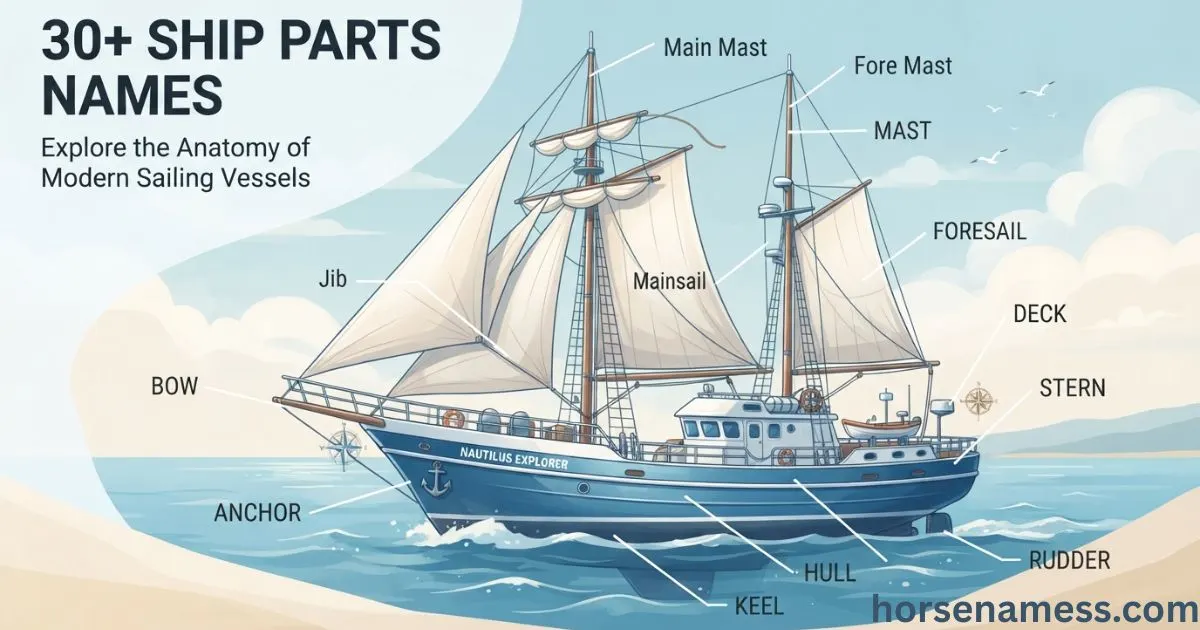
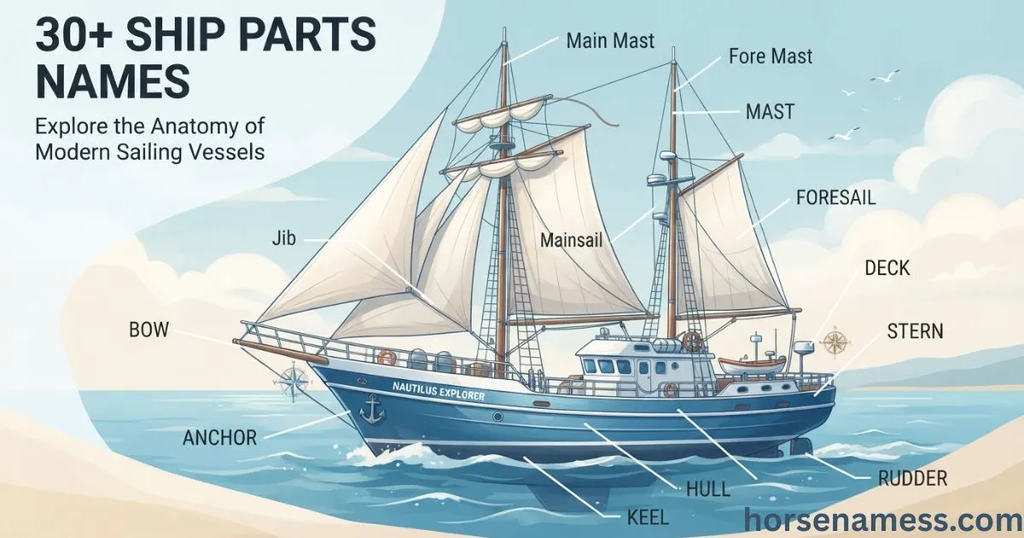
The following ship parts names cover the components most frequently identified in modern ship diagrams and maritime guides. Some vessels differ in layout and equipment, but the basic relationship between the hull, keel, bow, stern, deck, bridge, machinery, propulsion, and steering remains useful across many ship types.
A helpful way to visualize a vessel is to move from the outside inward and from front to back. Start with the bow and stern, then identify the hull and keel, move upward to the deck and bridge, and finally look at the propeller, rudder, anchor, cargo equipment, and safety gear. This turns a complicated ship diagram into a logical map.
Hull
ship parts names The hull is the main watertight body of a ship and provides buoyancy while supporting many other components. It contains or supports decks, bulkheads, machinery spaces, cargo areas, and superstructure. In simple terms, if you imagine the vessel as a body, the hull is its protective structural shell.
Bow
The bow is the forward end of the vessel. Its shape is designed to move through water efficiently while limiting resistance and excessive ship parts names spray. Many larger commercial ships use a bulbous bow, positioned below the waterline, to modify wave behavior and potentially reduce resistance at appropriate operating speeds.
Stern
The stern is the rear or aft end of a ship. It commonly contains or supports important propulsion, steering, engine, and stern-access equipment. The shape varies among vessel designs, while the transom may form the flat surface at the very back.
Keel
The keel runs along the bottom centerline and is one of the fundamental structural elements of a ship. It is often compared with a backbone because ship parts names the vessel’s framing is organized around it. The keel contributes to strength, stability, structural continuity, and load distribution.
Ship Deck
The ship deck forms a horizontal working or structural surface over the hull. A vessel may have multiple decks, including main, weather, fore, aft, upper, or lower decks, depending on its design. Decks provide working areas, access routes, equipment locations, and protection for spaces beneath them.
Bridge
The bridge is the vessel’s primary command and navigation area. From here, officers monitor the ship’s position, speed, heading, surrounding conditions, communications, and navigation equipment. Modern bridges can incorporate GPS, electronic charts, radar, communication systems, and other integrated navigation technology.
Navigation Bridge
The navigation bridge provides the crew with a position from which the vessel can be monitored and controlled. Its elevated location gives ship parts names officers a broad view around the ship. The pilot house, navigation equipment, communication systems, and steering controls are closely associated with this operational area.
Mast
A mast is a vertical structure used to support equipment above the deck or superstructure. Depending on the vessel, it can carry navigation lights, radar equipment, antennas, signal equipment, scanners, or cargo-handling gear. Modern masts are therefore much more than traditional sailing supports.
Forecastle
The forecastle is the forward raised section of a ship, traditionally associated with the bow area. On modern vessels it commonly accommodates anchoring equipment, windlasses, anchor chains, and ground tackle. The term remains important when reading cargo-ship diagrams and learning professional deck terminology.
Bulbous Bow
A bulbous bow is a rounded underwater projection near the front of certain large vessels. Its purpose is to influence the waves created as the hull moves through water, which can reduce resistance under suitable operating conditions. Its usefulness depends on the vessel’s size, speed, hull design, and service profile.
Propeller
The propeller converts rotational power from the propulsion system into thrust by accelerating water backward. The engine, shaft, and propeller work together as a propulsion unit. Propeller designs vary according to vessel requirements, and materials must withstand a demanding marine environment.
Rudder
The rudder controls directional changes by influencing water flow behind the propulsion system. While the propeller supplies thrust, the rudder helps steer the vessel. A rudder assembly can include the rudder blade, trunk, hinges, links, carrier bearing, and steering gear, depending on its design.
Anchor
An anchor helps hold a vessel in position by engaging the seabed. It is connected to an anchor chain and is normally stored near the bow when not deployed. Anchoring equipment is particularly important when a ship is waiting offshore or needs to remain stationary without moving to a berth.
Freeboard
Freeboard describes the vertical distance between the waterline and the relevant upper deck edge. It is closely connected with a vessel’s load line, buoyancy margin, cargo capacity, and safety. The measurement is important because how deeply a ship sits in the water affects its operating condition.
Ballast Tanks
Ballast tanks hold water that can be managed to influence a vessel’s stability and trim. Ships may take in or discharge ballast water as operating conditions change. Proper ballast management is also associated with environmental requirements because ballast water can transport organisms between different marine regions.
Bunker tanks
Bunker tanks store fuel and, depending on vessel design, related oils needed for machinery operations. Because fuels and lubricating oils present fire and contamination risks, tank location, containment, ventilation, maintenance, and safe handling are important parts of shipboard engineering practice.
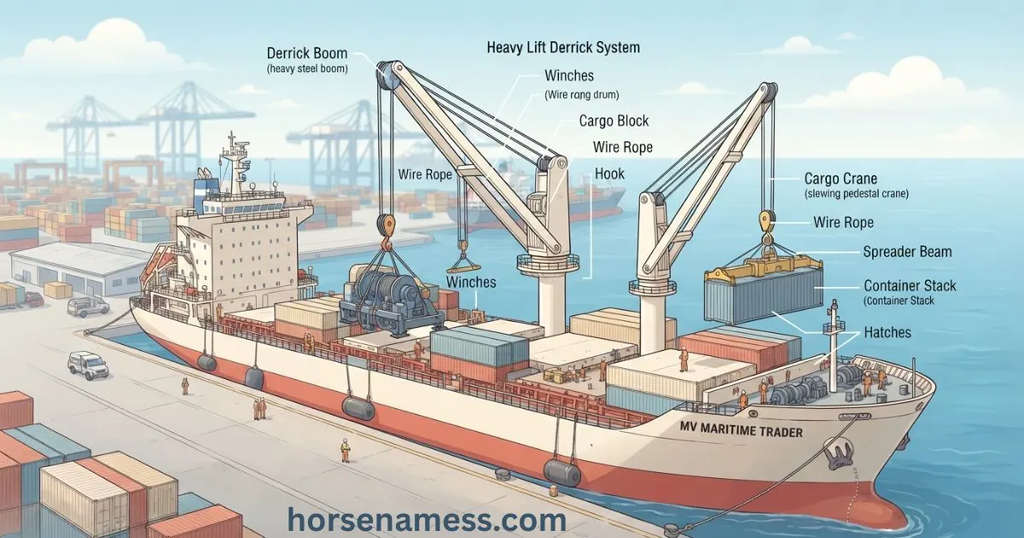
Ship Cargo gear (Derrick/Cranes)
Ship cargo gear includes equipment such as derricks and cranes used to lift and move cargo or other heavy objects. Some ships rely heavily on onboard cargo-handling machinery, while others use shore-based cranes. The equipment selected depends on the vessel’s cargo type, design, and operating role.
Lifeboat
A lifeboat is emergency survival equipment designed to support evacuation when remaining aboard a vessel is no longer safe. Lifeboats are part of a ship’s wider life-saving appliance system, alongside equipment such as life buoys and life rafts. Their arrangement and launching systems depend on vessel design and applicable safety rules.
Conclusion
Understanding ship parts names becomes much easier when the components are viewed as one connected system rather than as isolated vocabulary. The hull and keel provide the structural foundation, the bow and stern define the vessel’s ends, the deck and bridge support operations and navigation, while the propeller and rudder provide movement and steering.
For anyone learning maritime terminology, the most useful starting point is to master the core words first: bow, stern, port, starboard, hull, keel, deck, bridge, mast, propeller, rudder, anchor, and engine room. From there, specialized terms such as ballast tanks, freeboard, cargo gear, forecastle, and bulbous bow become much easier to understand. The U.S. Naval History and Heritage Command likewise treats the keel, hull, decks, bulkheads, propeller, and rudder as foundational parts of ship nomenclature.
FAQ Section
What are the three main parts of a ship?
Marine Insight identifies the hull, engine room, and navigation bridge as three major parts of a vessel. Other components including the bow, stern, keel, propeller, rudder, decks, cargo spaces, and accommodation work around these primary systems.
What is the front of a ship called?
The front of a ship is called the bow. The rear is the stern. The direction toward the bow is forward, while movement toward the stern is described as aft.
What is the lowest part of a ship called?
The keel is the principal structural member running along the bottom centerline of the vessel. It is commonly described as the backbone or foundation of the ship.
What are the left and right sides of a ship called?
When facing the bow, the left side is port and the right side is starboard. These terms remain fixed regardless of where someone is standing or which direction they turn.
What is the difference between a hull and a deck?
The hull is the main watertight body of the vessel, while a deck is a horizontal structural or working surface associated with the hull. A ship can contain several decks serving different purposes.
What does a propeller do on a ship?
A propeller produces thrust by rotating and accelerating water backward. The resulting force helps move the vessel forward. It operates as part of the propulsion system alongside the engine and shaft.
What does a rudder do?
A rudder helps steer the ship by changing the direction of water flow behind the propulsion system. The propeller primarily creates thrust, while the rudder controls directional response.
What is a bulbous bow used for?
A bulbous bow is an underwater projection at the front of some vessels. It changes the vessel’s wave pattern and can reduce resistance under suitable operating conditions, potentially improving efficiency.
What is a monkey island on a ship?
A monkey island is an elevated deck or platform above the bridge. Depending on vessel design, it can accommodate equipment such as a magnetic compass, antennas, radar-related equipment, navigation lights, and communication equipment.

Morgan is a horse naming enthusiast and equestrian content writer with a passion for helping horse owners find the perfect names for their equine companions. From classic and elegant names to unique, Western, funny, and breed-specific ideas, Morgan creates well-researched, easy-to-browse name collections designed to inspire every horse lover. The goal is to make choosing the right horse name simple, enjoyable, and memorable.