100+ Japanese Boy Names That Start With K Meaningful Picks
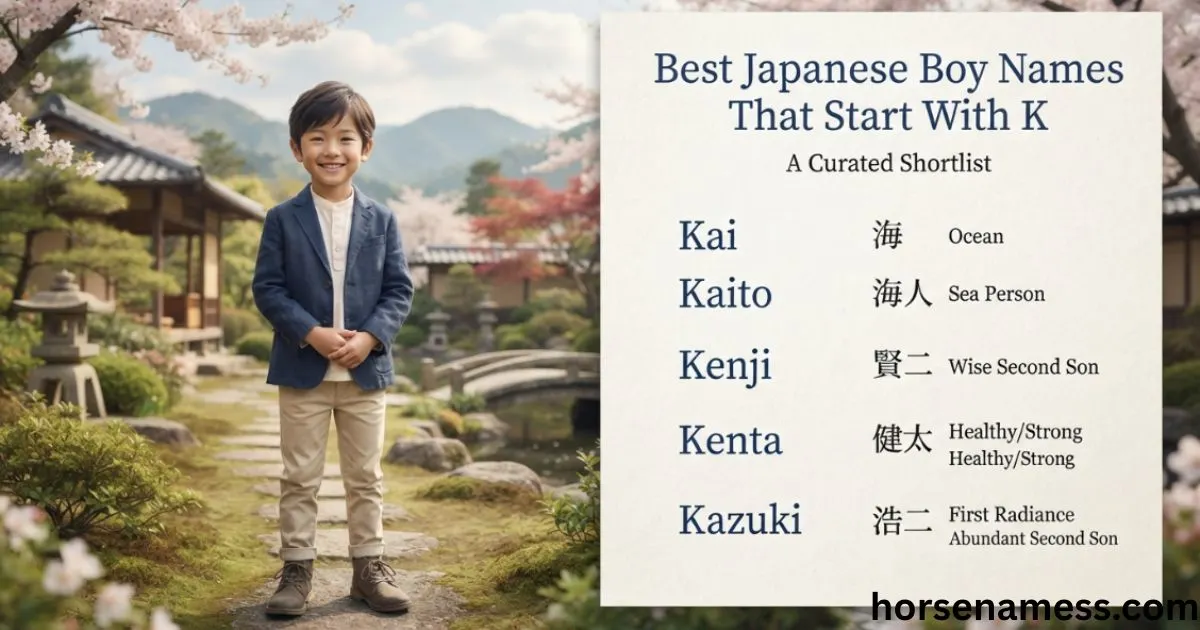
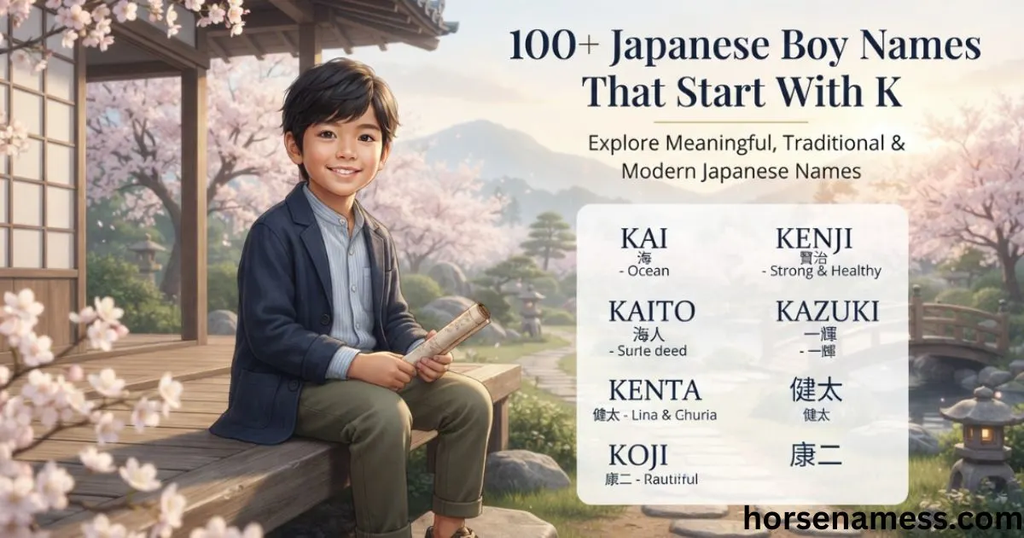
The most recognizable Japanese boy names that start with K include Kai, Kaito, Kazuki, Kenji, Kenta, Kota, Kiyoshi, Koji, Kazuya, and Keisuke. These names cover themes such as the ocean, strength, harmony, health, peace, and hope. Their exact meanings depend on the kanji selected.
| Name | Commonly listed meaning or association | Style |
| Kai | Sea or ocean | Short and international |
| Kaito | Ocean and soaring | Modern and energetic |
| Kazuki | Harmony and hope | Gentle and balanced |
| Kenji | Strength, health, or second son | Traditional |
| Kenta | Healthy and strong | Strong and familiar |
| Kiyoshi | Pure or clean | Classic |
| Kota | Happiness or good fortune | Friendly and compact |
| Kazuya | Harmony or peace | Soft and meaningful |
| Keisuke | Help or support | Traditional-modern |
| Kengo | Strength and bravery | Bold |
These are commonly cited interpretations, not universal definitions. A name’s Japanese writing can change its meaning, so parents should confirm the specific kanji rather than relying only on an English-language translation.
Trendy Japanese Boy Names That Start With K With Meaning
For families seeking modern Japanese names, options such as Kaito, Kai, Koki, Kairi, Kaisei, Kyo, Kosei, and Kazuki offer different sounds and imagery. Some feel short and contemporary, while others connect with light, the ocean, stars, hope, or harmony.
A trendy name does not necessarily mean a newly invented name. A traditional Japanese name may feel modern because of its short pronunciation, international familiarity, or selected kanji. When choosing a name for a baby in the United States, consider both cultural meaning and how comfortably relatives and teachers may pronounce it.
Beautiful Japanese Boy Names That Start With K for Different Personalities
A name can reflect the feeling you want to express. For a calm personality, consider Kiyoshi, Kiyoto, Kazuma, or Kyoshi. For a bright impression, Koki, Ko, and Kaisei appear in naming lists with associations involving light, shining, or the sky.
| Desired feeling | Names to explore |
| Strong | Kenta, Kengo, Kenki |
| Calm | Kiyoshi, Kiyoto, Kyoshi |
| Bright | Koki, Ko, Kaisei |
| Nature-inspired | Kairi, Kazen, Katsura |
| Traditional | Kenji, Keiichi, Kentaro |
| Ocean-inspired | Kai, Kaito, Kaisei |
The best choice depends on whether the name is for a real child, fictional character, game identity, or creative project. For a baby, cultural usage and accurate kanji deserve greater attention than simply choosing the most dramatic sound.
Modern Japanese Boy Names That Start With K With Meaning
Modern-looking choices include Kosei, Koki, Kiyoto, Kaisei, Kairi, Kairo, Kuno, Kira, and Kazumi. Their associated themes include clear skies, brightness, purity, ocean imagery, freedom, and harmony. However, an English naming website’s interpretation should not be treated as proof of everyday usage in Japan.
For an American family, pronunciation is also important. Kai is especially concise, while Kaito, Kenta, Kenji, and Kazuki offer recognizable two- or three-syllable patterns. Say the complete first and last name aloud several times, including in ordinary conversation, before making a final decision.
Unique Japanese Boy Names That Start With K With Meaning
Readers searching for unique Japanese boy names that start with K may explore Kisen, Kogane, Kuno, Katori, Kijuro, Kensho, Keizo, Kenki, and Katsura. These options can create a distinctive atmosphere, especially in fiction, fantasy, role-playing games, and character development.
The word unique requires care. A name may be uncommon among American babies while being familiar, unusual, old-fashioned, or even unsuitable as a contemporary Japanese given name. If authenticity matters, verify the name with a Japanese-language naming resource or a knowledgeable native speaker.
Choosing Between Traditional and Modern Japanese Boy Names That Start With K
Traditional-feeling choices include Kenji, Kenta, Kiyoshi, Kazuo, Koji, Keiichi, Kentaro, and Keitaro. Modern-feeling choices may include Kai, Kaito, Koki, Kairi, Kazuki, and Kaisei. These categories describe general impressions, not strict historical classifications or official popularity rankings.
Think about the story behind the name. A traditional name may connect with family heritage or a classic sound, while a shorter contemporary name may be easier to use in an English-speaking environment. Neither approach is automatically better; the right option depends on your purpose and personal priorities.
Japanese Boy Names That Start With K Inspired by Nature
Nature-related names are popular in naming content because they create vivid images. Kai and Kaito may be associated with the sea, Kairi with ocean imagery, Kaisei with sea and stars, Kazen with wind, Katsura with a tree, and Kosei with a clear blue sky.
These associations should be checked against the exact written form. For example, a romanized name may have multiple kanji combinations, and not every poetic English gloss represents a standard or widely used Japanese given name. Use nature imagery as a starting point for research rather than final proof.
Japanese Boy Names That Start With K Associated With Strength and Courage
If you want a name connected with strength, courage, victory, or resilience, consider Kenta, Ken, Kengo, Katsuo, Katsuya, Katsuro, Kenki, and Kenzo. The meanings and associations differ according to the characters used, so each name should be checked individually.
A meaningful strength-related name can express a parent’s hope rather than predict a child’s personality. For a character, however, the name can support a specific narrative role, such as a determined hero, disciplined warrior, courageous leader, or resilient survivor.
Japanese Boy Names That Start With K Associated With Peace and Harmony
Harmony-related choices include Kazuki, Kazuya, Kazuo, Kazuma, Kazuhiro, Kazuto, Kohei, and Kyohei in commonly listed kanji interpretations. These names may appeal to parents who want a gentle meaning connected with balance, cooperation, peacefulness, or family unity.
Before selecting one, compare the pronunciation, kanji, and full-name rhythm. A name that looks attractive in romanized form may have a different nuance when written in Japanese. A reliable source should identify the actual characters rather than assigning one fixed meaning to every possible spelling.
What Should You Check Before Choosing Japanese Boy Names That Start With K?
Start by confirming the kanji, pronunciation, meaning, cultural usage, and suitability as a given name. Then say the name with the family surname. Consider whether the spelling will be easy for people in your community to read, while respecting that unfamiliarity alone does not make a Japanese name inappropriate.
If the child will be registered in Japan, investigate the current requirements for name readings. The opened competitor article reports that Japan’s family-register system introduced rules concerning generally recognized readings from May 26, 2025; official Japanese government guidance should be consulted for the current legal details.
How Japanese Boy Names That Start With K Can Have More Than One Meaning
Japanese names can share the same pronunciation while using different kanji. Consequently, Kaito, Kenji, Kazuki, Koki, and Kazuya may have different meanings depending on the written characters. The romanized spelling represents sound, but the kanji adds another layer of meaning and cultural interpretation.
For example, one commonly listed form of Kaito is 海翔, associated with the sea and soaring. Another person named Kaito may use different characters. This is why a responsible name guide should describe a meaning as belonging to a specific kanji form rather than presenting it as universal.
Best Japanese Boy Names That Start With K for a Shortlist
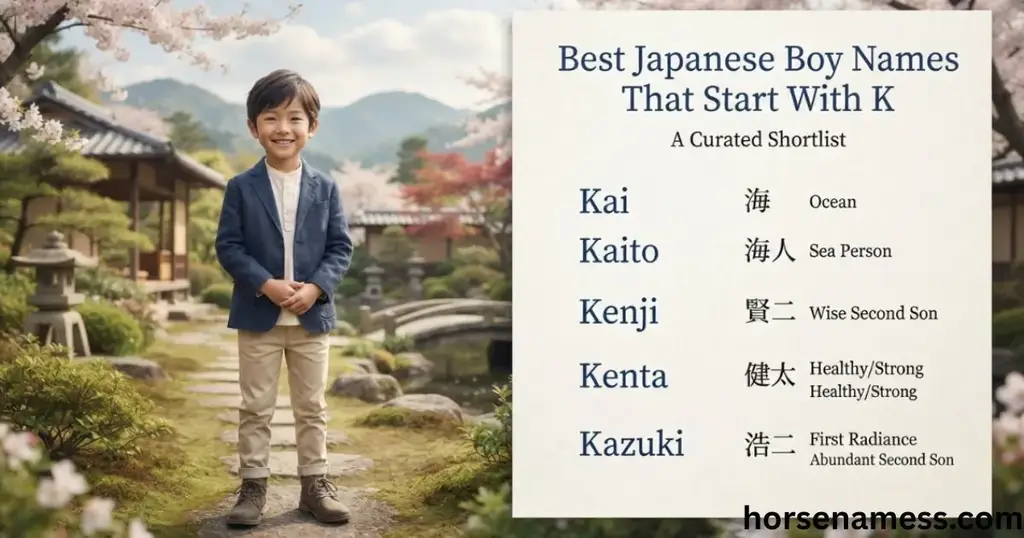
If you want a manageable starting shortlist, consider these names:
| Name | Why explore it |
| Kai | Very short and easy to remember |
| Kaito | Energetic ocean and soaring imagery |
| Kenji | Traditional and recognizable |
| Kenta | Strong, direct sound |
| Kazuki | Harmony and hope associations |
| Kazuya | Peaceful and balanced feeling |
| Keita | Compact traditional-modern style |
| Kiyoshi | Pure and calm association |
| Kota | Friendly and concise |
| Kohei | Peaceful impression |
| Kenzo | Distinctive international sound |
| Koki | Bright and energetic |
| Kaisei | Sea-and-stars imagery |
| Kairi | Ocean-related association |
This shortlist is a research starting point, not an official ranking of Japanese popularity. For a real baby, confirm the kanji and cultural usage. For a fictional character, you can also consider how the name supports the character’s setting, personality, and narrative role.
Conclusion
The most meaningful Japanese boy names that start with K combine a pleasing sound, appropriate cultural context, and carefully verified kanji. Names such as Kaito, Kai, Kenji, Kenta, Kazuki, Kazuya, and Kiyoshi offer different associations, from the ocean and strength to harmony and purity.
Whether you are naming a baby, fictional character, or creative project, avoid choosing a name only because an online list gives it an attractive English meaning. Check the Japanese characters, pronunciation, intended usage, and relationship with the surname. A thoughtful name is more than a sound; it carries context, identity, and personal meaning.
FAQ Section
What are some Japanese boy names that start with K?
Popularly listed options include Kai, Kaito, Kazuki, Kenji, Kenta, Kota, Kiyoshi, Koji, Kazuya, Keisuke, and Kengo. The meaning of each name depends on the kanji used, so verify the exact Japanese spelling before choosing one.
What does Kaito mean in Japanese?
One commonly listed spelling is 海翔, which combines characters associated with the sea and soaring or flying. Other kanji combinations can produce different meanings, so “ocean and flying” should not be treated as the only possible definition.
Is Kai a Japanese boy’s name?
Yes, Kai is used as a Japanese given name and is commonly associated with the sea or ocean in certain kanji forms. Because Kai can have different written forms and uses across languages, confirm the specific characters and cultural context.
What does Kenji mean in Japanese?
Kenji has several possible kanji forms. One commonly listed form, 健二, includes associations with health or strength and the number two or a second position. Other spellings may have different meanings.
Are Japanese boy names beginning with K traditional or modern?
They can be either. Kenji, Kiyoshi, Kazuo, and Koji may create a more traditional impression, while Kai, Kaito, Koki, and Kairi may feel more contemporary to some audiences. The impression also depends on the person’s generation and selected kanji.
Which Japanese K names are associated with harmony?
Commonly listed harmony-related names include Kazuki, Kazuya, Kazuo, Kazuma, Kazuhiro, Kazuto, Kohei, and Kyohei. These associations refer to particular kanji interpretations rather than a fixed meaning for every spelling.
Which Japanese boy names beginning with K are connected with nature?
Examples include Kai and Kaito for ocean-related imagery, Kairi for ocean associations, Kaisei for sea-and-stars imagery, Kazen for wind, Katsura for a tree, and Kosei for a clear-sky impression. Always verify the exact kanji before treating a gloss as definitive.
Can one Japanese name have multiple meanings?
Yes. Different kanji can represent the same pronunciation, and the chosen characters may change the literal meaning or symbolism. This is why the romanized spelling alone cannot establish the complete meaning of a Japanese name.
How should I choose a Japanese boy name for an American baby?
Compare the exact kanji, pronunciation, cultural usage, meaning, and surname compatibility. It is also useful to say the name aloud and consider how it may be pronounced by family members, teachers, and friends. If registration in Japan is relevant, consult current official guidance about permitted readings.
Are rare Japanese names always authentic Japanese given names?
No. A name may be uncommon in the United States but familiar in Japan, or it may be an unusual combination presented by an English-language naming website. Verify whether the name is genuinely used as a Japanese given name, particularly when cultural authenticity is important.

Morgan is a horse naming enthusiast and equestrian content writer with a passion for helping horse owners find the perfect names for their equine companions. From classic and elegant names to unique, Western, funny, and breed-specific ideas, Morgan creates well-researched, easy-to-browse name collections designed to inspire every horse lover. The goal is to make choosing the right horse name simple, enjoyable, and memorable.