40+ Spanish Names With E Boy Names and Meanings
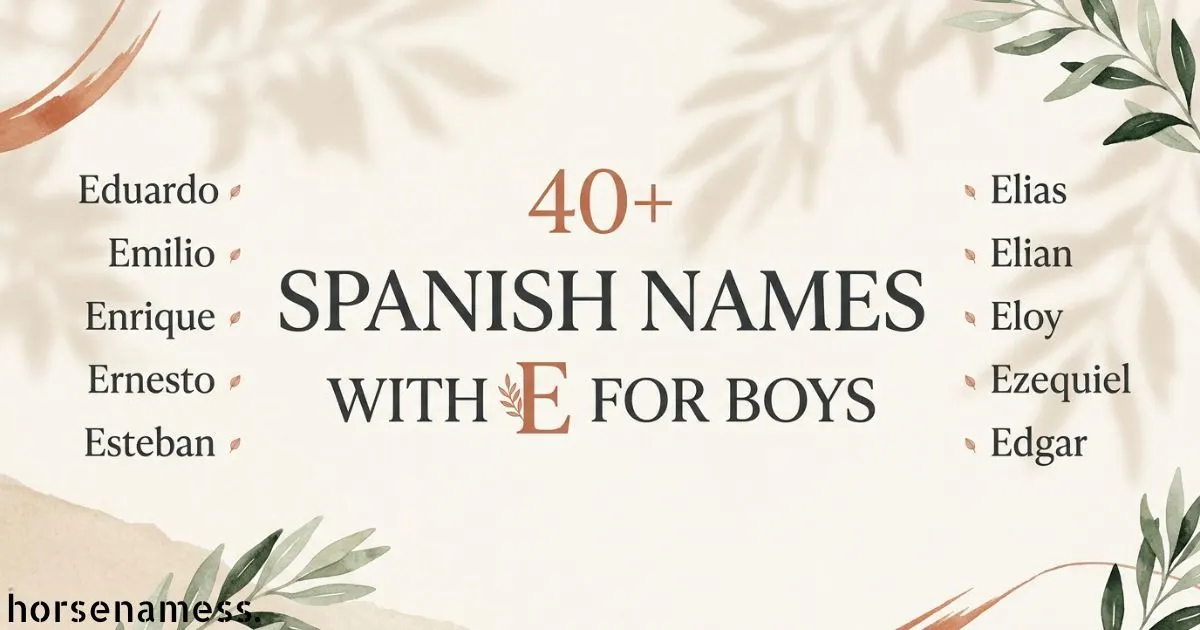
Quick answer: Spanish names with E boy include Eduardo, Emilio, Enrique, Esteban, Elías, Ezequiel, and Ernesto. For a less common choice, explore Evaristo, Eutimio, Eutropio, Eneko, and Ekaitz. This list covers name meanings, pronunciation, traditional choices, and names used in Spain’s regional languages.
Some names have Spanish forms but roots in other languages. Basque and Catalan names are marked separately to help you understand their background.
Table of Contents
- Spanish Boy Names With E and Their Meanings
- Popular and Classic Names
- Modern and Cool Names
- Rare Spanish Boy Names
- Short Names and Nicknames
- Spanish Naming Traditions
- Middle Name Pairings
- Frequently Asked Questions
Spanish Boy Names With E and Their Meanings
| Name | Meaning or origin | Style |
| Eduardo | Spanish form of Edward, traditionally associated with wealth and protection | Classic |
| Edmundo | Spanish form of Edmund, associated with wealth and protection | Classic |
| Edgar | Old English name linked to wealth and a spear | Traditional |
| Edgardo | Spanish form of Edgar | Traditional |
| Efraín | Spanish form of Ephraim, traditionally associated with fruitfulness | Biblical |
| Efrén | Spanish form of Ephrem | Traditional |
| Eladio | Spanish form of Helladius; an older Spanish masculine name | Traditional |
| Elías | Spanish form of Elijah, meaning “my God is Yahweh” | Biblical |
| Elio | Spanish and Italian form of Aelius | Short |
| Eliseo | Spanish form of Elisha, commonly understood as “God is salvation” | Biblical |
| Eloy | Spanish form of Eligius, linked to the Latin word eligere, “to choose” | Traditional |
| Eligio | Spanish form of Eligius | Traditional |
| Elpidio | Spanish form of Elpidius, an old Greek name | Rare |
| Eleuterio | From a Greek name associated with freedom | Traditional |
| Emeterio | Spanish form of Emeterius, a name associated with early Christian saints | Traditional |
| Emigdio | Spanish form of Emygdius | Rare |
| Emiliano | Spanish form of Aemilianus, derived from the Roman family name Aemilius | Classic |
| Emilio | Spanish form of Aemilius, usually linked to Latin aemulus, “rival” | Classic |
| Emmanuel | Biblical name from Hebrew, meaning “God is with us” | Biblical |
| Enrique | Spanish form of Heinrich, traditionally interpreted as “home ruler” | Classic |
| Enzo | Used in Spain; mainly associated with Italian naming traditions | Modern |
| Epifanio | From Greek Epiphanios, meaning “appearance” or “manifestation” | Traditional |
| Erasmo | Spanish form of Erasmus, associated with love | Traditional |
| Eric | Old Norse name traditionally interpreted as “ever ruler”; used in Spain | International |
| Ernesto | Spanish form of Ernest, associated with seriousness | Classic |
| Esteban | Spanish form of Stephen, from Greek Stephanos, meaning “crown” or “wreath” | Classic |
| Estanislao | Spanish form of Stanisław, associated with glory and standing | Traditional |
| Eugenio | Spanish form of Eugenius, from Greek elements meaning “well-born” | Classic |
| Eusebio | Spanish form of Eusebius, associated with devotion or piety | Traditional |
| Evaristo | Spanish form of Evaristus, traditionally associated with being pleasing | Traditional |
| Everardo | Spanish form of Everard, a Germanic name associated with strength | Traditional |
| Eberardo | A less common Spanish form related to Everard | Rare |
| Edelmiro | Spanish masculine name of Germanic origin | Rare |
| Eutimio | Spanish form of Euthymius, an older Greek name | Rare |
| Eutropio | Spanish form of Eutropius, an ancient name | Rare |
| Ezequiel | Spanish form of Ezekiel, meaning “God strengthens” | Biblical |
| Eleazar | Hebrew biblical name meaning “God has helped” | Biblical |
| Esaú | Spanish form of Esau, traditionally associated with “hairy” | Biblical |
| Eulogio | Spanish form of Eulogius, from Greek roots associated with praise | Traditional |
| Evelio | Spanish masculine name with an older naming history | Rare |
| Eder | Basque name meaning “handsome” or “beautiful” | Basque |
| Eneko | Basque masculine name from the Íñigo naming tradition | Basque |
| Endika | Basque form related to Enrique | Basque |
| Ekaitz | Basque name meaning “storm” | Basque |
| Enric | Catalan form related to Enrique and Henry | Catalan |
| Eudald | Traditional Catalan masculine name | Catalan |
For individual histories, consult Behind the Name’s Spanish name directory and its entries for each name. Some older names have uncertain meanings, so the table identifies their documented forms or historical background where a firm translation is unavailable.
Popular and Classic Spanish Boy Names
Eduardo, Emilio, Enrique, Esteban, Elías, Ezequiel, and Ernesto are useful starting points if you want familiar names with established histories.
Popularity depends on whether you mean the names of people living in Spain or the names most often given to babies today. Spain’s National Statistics Institute (INE) publishes both kinds of data. Its latest overview was published on April 23, 2026, with resident-name data dated January 1, 2025, and newborn data for 2024.
Use the official INE name finder to check individual E names. It can show frequency by geographic area and other available filters. Record the count and date before describing any name as popular or rare.
Modern and Cool Spanish Boy Names
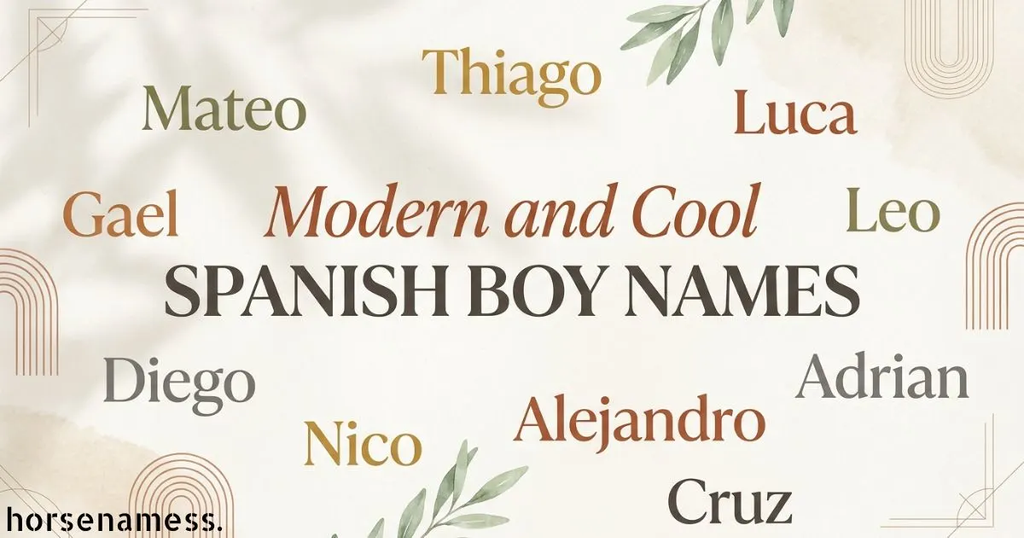
For a short name, consider Enzo, Elio, Eric, or Elías. Enzo is mainly associated with Italian naming traditions but is also used in Spain. Eric has Old Norse roots and is used in several European countries.
For regional choices, Eneko and Ekaitz come from Basque naming traditions. Enric is the Catalan form related to Enrique. These names are good options for families who want a connection to a particular language or region.
Rare Spanish Boy Names Starting With E
Explore Eberardo, Eutimio, Eutropio, Elpidio, Evaristo, and Eusebio if you prefer older or less familiar names. Their histories vary, so compare the individual entries rather than treating every traditional name as equally rare.
To check how often a name is used in Spain today, consult the INE database. Some names fall below its reporting threshold and will not appear in the results.
Short Spanish Boy Names and Nicknames
| Full name | Familiar nickname |
| Eduardo | Edu, Lalo |
| Emilio | Emi |
| Emiliano | Emi |
| Enrique | Quique |
| Ernesto | Neto |
| Elías | Eli |
| Eugenio | Euge |
| Ezequiel | Eze |
| Emmanuel | Manu |
These are commonly encountered short forms. For names without an established nickname, using the full name is a perfectly good option.
Spanish Naming Traditions
Spanish naming traditions may include two given names, such as José Luis, and two surnames. Traditionally, one surname comes from each parent, although legal rules and family arrangements can differ.
Say the complete name aloud with the family surnames. This can help you judge its rhythm, spelling, and how well the names work together in Spanish and English.
Middle Name Pairings
| First name | Pairing idea |
| Eduardo | Eduardo Martín |
| Emilio | Emilio Gabriel |
| Enrique | Enrique Mateo |
| Esteban | Esteban Lucas |
| Elías | Elías Manuel |
| Emiliano | Emiliano José |
| Ezequiel | Ezequiel Andrés |
| Enzo | Enzo Rafael |
These are suggested combinations, not a ranking of traditional Spanish pairings. Choose a combination that fits your family and sounds natural with the surname.
Conclusion
For Spanish boy names beginning with E, consider Eduardo, Emilio, Enrique, Esteban, Elías, and Ezequiel. For older or less familiar choices, explore Evaristo, Eutimio, and Eutropio. Basque names such as Eneko and Ekaitz and Catalan Enric offer regional alternatives. Compare name history, pronunciation, and current usage to find the right fit.
FAQs
What Spanish names start with E?
Eduardo, Emilio, Enrique, Esteban, Elías, Ezequiel, Ernesto, Eugenio, and Eusebio are Spanish masculine names beginning with E. Basque and Catalan options include Eneko, Ekaitz, and Enric.
What are baby boy names that start with E?
Eduardo, Emilio, Enrique, Esteban, Elías, Emiliano, and Ezequiel are established options. Consider pronunciation, family preference, and cultural background when choosing one.
What is a cool Spanish name for a boy?
Enzo, Elio, Emilio, and Elías are good options if you prefer short or recognizable names. Eneko and Ekaitz may appeal to families interested in Basque names.
What is a rare E name for a boy?
Eutimio, Eutropio, Eberardo, and Elpidio are less familiar options to investigate. Check INE data to compare their recorded frequency in Spain.
What does Emilio mean?
Emilio is the Spanish form of the Roman name Aemilius. It is usually linked to Latin aemulus, meaning “rival,” although explanations of the older family name differ.
What does Elías mean?
Elías is the Spanish form of Elijah. Its Hebrew origin is commonly translated as “my God is Yahweh.”
How is Ezequiel pronounced in Spanish?
In much of Latin America, Ezequiel is pronounced roughly “eh-seh-kee-EL.” In much of Spain, the first sound may be closer to “th” in “thin,” giving a pronunciation like “eh-theh-kee-EL.” Pronunciation varies by region.

Morgan is a horse naming enthusiast and equestrian content writer with a passion for helping horse owners find the perfect names for their equine companions. From classic and elegant names to unique, Western, funny, and breed-specific ideas, Morgan creates well-researched, easy-to-browse name collections designed to inspire every horse lover. The goal is to make choosing the right horse name simple, enjoyable, and memorable.