100+ Shakespearean Names: Character Names from the Bard’s Plays
Few sources of names are as rich as the works of William Shakespeare. Across his plays you’ll find heroes and heroines, villains and clowns, kings and fairies — and the names he gave them have a music and weight that still feels fresh four hundred years later. Whether you’re naming a baby, creating a character for a story, or looking for a distinguished name for a horse or pet, Shakespeare’s cast list is a treasure chest.
Below are more than one hundred real character names from Shakespeare’s plays, grouped by play. Where a name’s meaning or origin is well established, it’s noted; otherwise you’ll find a short note about the character.
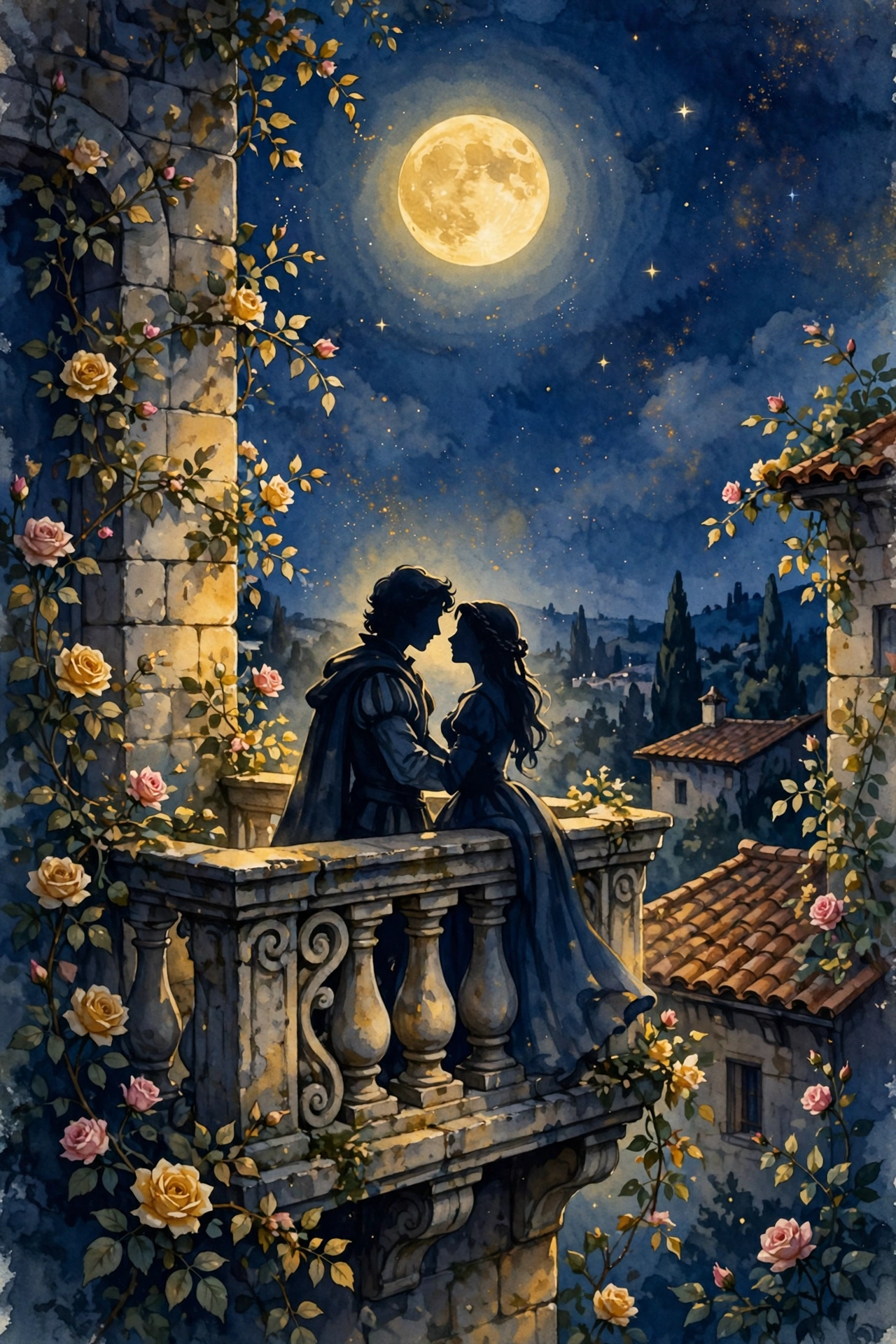
Romeo and Juliet
- Romeo — the lovesick hero; from Latin, “a pilgrim to Rome.”
- Juliet — the heroine; a diminutive of Julia, Latin for “youthful.”
- Mercutio — Romeo’s witty, mercurial friend; possibly linked to Mercury, the Roman messenger god.
- Tybalt — Juliet’s fiery cousin; a medieval form of Theobald, “bold people.”
- Benvolio — Romeo’s peace-making cousin; Italian, “good will.”
- Friar Laurence — the well-meaning friar; Laurence is Latin, “from Laurentum.”
- Paris — Juliet’s noble suitor; in Greek myth, the prince of Troy.
- Rosaline — Romeo’s first love; possibly “beautiful rose.”
- Capulet — Juliet’s family name; the house of Capulet.
- Montague — Romeo’s family name; the house of Montague.
- Escalus — the Prince of Verona; a Latin-sounding name of authority.
- Balthasar — Romeo’s loyal servant; a name with Hebrew and Aramaic roots.
Hamlet
- Hamlet — the brooding prince; from Amleth, a figure of Norse legend.
- Ophelia — the tragic heroine; Greek, “help” or “aid.”
- Claudius — the scheming king; Latin, “lame.”
- Gertrude — the queen; Germanic, “spear of strength.”
- Polonius — the long-winded counselor; a Latin-sounding name hinting at Poland.
- Laertes — Ophelia’s brother; in Greek myth, the father of Odysseus.
- Horatio — Hamlet’s loyal friend; from the Roman name Horatius.
- Fortinbras — the Norwegian prince; French, “strong in arms.”
- Rosencrantz — one of Hamlet’s false friends; a Danish-sounding surname.
- Guildenstern — his partner in spying; another Danish-sounding surname.
- Marcellus — a watchman at Elsinore; Latin, “little warrior.”
- Osric — the foppish courtier; Old English, “divine ruler.”
Othello
- Othello — the Moorish general; its origin is debated, possibly an Italian form of Otho.
- Desdemona — his devoted wife; Greek, “ill-fated” or “unfortunate.”
- Iago — the villain; the Spanish form of James, from Hebrew, “supplanter.”
- Cassio — Othello’s lieutenant; from the Roman name Cassius.
- Emilia — Iago’s outspoken wife; Latin, “rival” or “eager.”
- Roderigo — the lovesick suitor; Spanish and Germanic, “famous ruler.”
- Bianca — Cassio’s sweetheart; Italian, “white.”
- Brabantio — Desdemona’s father; a Venetian-sounding invention.
- Montano — the governor of Cyprus; Italian, “mountainous.”
- Lodovico — Desdemona’s kinsman; the Italian form of Louis, “famous warrior.”
Macbeth
- Macbeth — the ambitious thane; Gaelic, “son of life.”
- Banquo — his noble friend; a legendary Scottish name of uncertain origin.
- Macduff — the avenging thane; Gaelic, “son of the dark one.”
- Duncan — the murdered king; Gaelic, “dark warrior.”
- Malcolm — Duncan’s heir; Gaelic, “devotee of St. Columba.”
- Lennox — a Scottish lord; a Scottish place name.
- Ross — another thane; a Scottish place name.
- Fleance — Banquo’s son; a legendary name of uncertain origin.
- Seyton — Macbeth’s attendant; possibly a variant of the Scottish surname Seton.
- Siward — the English commander; Old English, “victory guard.”
A Midsummer Night’s Dream
- Oberon — king of the fairies; possibly from the Germanic Alberich, “elf ruler.”
- Titania — queen of the fairies; the feminine form of Titan, from Greek myth.
- Puck — the mischievous sprite, also called Robin Goodfellow; from English folklore.
- Lysander — one of the young lovers; Greek, “liberator.”
- Demetrius — his rival; Greek, “follower of Demeter.”
- Hermia — the heroine; possibly derived from Hermes, the Greek messenger god.
- Helena — her best friend; Greek, “bright, shining light.”
- Theseus — the Duke of Athens; the legendary Greek hero.
- Hippolyta — his Amazon bride; Greek, “loosed horses.”
- Bottom — the weaver turned donkey, Nick Bottom; a weaver’s term for a thread core.
- Quince — the carpenter-director, Peter Quince; named for the quince fruit.
- Egeus — Hermia’s stern father; a Greek-sounding name, possibly from Aegeus.
The Tempest
- Prospero — the exiled duke and magician; Latin and Italian, “prosperous.”
- Miranda — his daughter; Latin, “admirable” or “wonderful.”
- Ariel — the airy spirit; Hebrew, “lion of God.”
- Caliban — the wild islander; possibly an anagram of “canibal,” an old spelling of cannibal.
- Ferdinand — Miranda’s love; Germanic, “bold voyager.”
- Alonso — the King of Naples; Spanish and Germanic, “noble and ready.”
- Gonzalo — the kind counselor; Spanish and Germanic, “battle.”
- Stephano — the drunken butler; the Italian form of Stephen, Greek for “crown.”
- Trinculo — the jester; an Italian-sounding comic name.
- Sycorax — the late witch, Caliban’s mother; a name of exotic, uncertain origin.
Much Ado About Nothing
- Beatrice — the witty heroine; Latin, “she who brings happiness.”
- Benedick — her sparring partner; a form of Benedict, Latin for “blessed.”
- Hero — the gentle bride; Greek, “hero” or “demigod.”
- Claudio — her husband-to-be; Latin, “lame.”
- Don Pedro — the prince; a Spanish and Italian form of Peter, “rock.”
- Don John — his villainous brother; a form of John, Hebrew, “God is gracious.”
- Leonato — Hero’s father; Italian, “lion-like.”
- Dogberry — the comic constable; named for the dogberry, or dogwood, fruit.
- Margaret — Hero’s attendant; Greek, “pearl.”
- Ursula — another attendant; Latin, “little bear.”
King Lear
- Cordelia — the loyal daughter; possibly from the Latin cor, “heart.”
- Regan — one of the cruel sisters; from Geoffrey of Monmouth’s chronicles.
- Goneril — the other cruel sister; also from Geoffrey of Monmouth.
- Edgar — the wronged legitimate son; Old English, “wealthy spearman.”
- Edmund — his scheming brother; Old English, “wealthy protector.”
- Kent — the loyal earl in disguise; an English place name.
- Oswald — Goneril’s steward; Old English, “divine power.”
- Gloucester — the earl; an English place name.
- Albany — Regan’s husband, the Duke; a Scottish place name.
- Fool — Lear’s wise jester; known only by his role, never by a name.
Twelfth Night
- Viola — the shipwrecked heroine; Latin, “violet flower.”
- Olivia — the countess; Latin, “olive tree,” possibly coined by Shakespeare.
- Orsino — the lovesick duke; Italian, “little bear.”
- Malvolio — the puritanical steward; Italian, “ill will,” a deliberate joke.
- Sebastian — Viola’s twin; Greek, “venerable” or “revered.”
- Maria — the clever maid; a Latin form of Mary.
- Toby — Sir Toby Belch, the drunken knight; a form of Tobias, Hebrew, “God is good.”
- Feste — the fool; possibly Italian for “feast” or “celebration.”
- Fabian — the scheming servant; Latin, “bean grower.”
- Antonio — Sebastian’s rescuer; from the Roman name Antonius.
As You Like It
- Rosalind — the heroine; Germanic, “gentle horse.”
- Orlando — her love; the Italian form of Roland, “famous land.”
- Celia — her devoted cousin; Latin, “heavenly.”
- Jaques — the melancholy philosopher; a form of Jacques, or James.
- Touchstone — the court jester; named for the stone used to test gold.
- Oliver — Orlando’s brother; Germanic, “elf army,” often linked to the olive tree.
- Phoebe — the shepherdess; Greek, “bright,” a name of the moon goddess.
- Silvius — the lovesick shepherd; Latin, “of the woods.”
- Audrey — the country girl; Old English, “noble strength.”
- Adam — the faithful old servant; Hebrew, “man” or “earth.”
Choosing Your Shakespearean Name
A few things to keep in mind when picking from the list. First, consider the character behind the name — Desdemona and Cordelia are beautiful names carried by tragic heroines, while Beatrice and Rosalind belong to Shakespeare’s sharpest, most joyful women. For a pet or a horse, the comedies are a goldmine: Puck, Bottom, Touchstone, and Dogberry have a playful ring that suits an animal perfectly.
Second, say the name out loud with your surname. Shakespearean names tend to be rhythmic and multi-syllabic, so they pair best with shorter family names — “Viola Bennett” flows better than “Viola Bartholomew.”
Finally, remember that many of these names work beautifully in their original form, but a few have natural nicknames: Beatrice to Bea, Sebastian to Seb, Rosalind to Rosie. A grand stage name with a cozy everyday nickname is the best of both worlds.
If none of these quite fit, browse our other name lists for more ideas — from elegant horse names to timeless baby names, there’s a perfect name waiting for every new arrival.
Frequently Asked Questions
Why name your horse after a Shakespeare character?
Shakespearean names are unique and meaningful — they carry history and literature with them, and they tend to be memorable in the show ring. A horse named Oberon or Portia stands out instantly.
What are the best Shakespearean names for babies?
Timeless choices include Olivia, Miranda, Juliet, Viola, Sebastian, Orlando, and Henry. Many have been in steady use for centuries, so they feel classic rather than costume-like.
Are Shakespearean names too unusual for everyday use?
Most are surprisingly wearable. Names like Jessica (coined by Shakespeare), Miranda, and Sebastian are mainstream today. Even bolder picks like Ophelia and Lysander are rising as parents seek distinctive names.
Which Shakespeare play has the best character names?
A Midsummer Night's Dream offers magical picks like Oberon, Titania, and Puck; Romeo and Juliet gives romantic ones; and the histories supply strong, regal names like Henry, Richard, and Eleanor.

Morgan is a horse naming enthusiast and equestrian content writer with a passion for helping horse owners find the perfect names for their equine companions. From classic and elegant names to unique, Western, funny, and breed-specific ideas, Morgan creates well-researched, easy-to-browse name collections designed to inspire every horse lover. The goal is to make choosing the right horse name simple, enjoyable, and memorable.