Sampson The Biggest Horse in the World
Meet Sampson, the biggest horse in the world, a record-breaking Shire gelding at 21.25 hands. Discover his full story, size, and facts inside.
When most people picture the biggest horse in the world, one name always surfaces: Sampson.
Recognised by Guinness World Records as the tallest and heaviest horse ever documented, Sampson was a Shire horse gelding whose sheer size earned him a second name, Mammoth, later in life. Bred in Bedfordshire, England, in 1846, he reached a peak height of 21.25 hands and an estimated weight of 1,524 kilograms by the time he was just four years old.
More than 170 years later, no draft horse has matched his combined height and weight record, making Sampson the definitive answer whenever the question of the world’s largest horse comes up.
Sampson at a Glance
The essential facts about the biggest horse ever recorded:
- Height: 21.25 hands (219.7 cm / 7 ft 2.5 in) at the withers
- Weight: Approximately 1,524 kg (3,360 lb)
- Breed: Shire horse (gelding)
- Born: 1846, Toddington Mills, Bedfordshire, England
- Record: Tallest and heaviest horse ever (Guinness World Records, 1850)
- Later name: Mammoth — renamed for his sheer size
Who Was Sampson the Horse?
Sampson was a Shire horse gelding bred by Thomas Cleaver at Toddington Mills in Bedfordshire, England. He was foaled in 1846, and by 1850, at just four years old, he had already grown into a genuine giant of a horse.
Because of his extraordinary size, Sampson was later renamed Mammoth, a name far more fitting for an animal of his stature. Very little else is documented about his life. There are no detailed accounts of his temperament, his working life, or how he was cared for. Almost everything known about him comes directly from Guinness World Records’ historical measurements rather than personal records, letters, or newspaper accounts from the period.
This gap in the historical record is itself part of why Sampson remains such a compelling figure. He achieved something no horse before or since has matched, yet he lived and died in relative obscurity, only becoming widely known decades later once Guinness World Records catalogued his measurements.
Where and When Sampson Lived
| Detail | Information |
| Foaled | 1846 |
| Location | Toddington Mills, Bedfordshire, England |
| Breeder | Thomas Cleaver |
| Breed | Shire horse |
| Sex | Gelding |
| Measured at | 4 years old (1850) |
| Later name | Mammoth |
How Big Was Sampson?
According to Guinness World Records, Sampson measured:
- Height: 21.25 hands, or 219.7 cm (7 ft 2.5 in), measured at the withers
- Weight: approximately 1,524 kg (3,360 lb)
Horse height is always measured from the ground to the withers, the ridge between the shoulder blades not to the top of the head. This is the standard measurement used across the horse industry, from show horses to working draft breeds, which is why Sampson’s 21.25-hand figure is directly comparable to modern horse measurements.
For context, an average riding horse stands between 14 and 17 hands tall. Sampson exceeded the upper end of that range by more than four hands, a substantial difference in a measurement system where even half a hand is considered a noticeable gap between horses.
Sampson’s Measurements in Different Units
| Measurement | Imperial | Metric |
| Height | 7 ft 2.5 in | 219.7 cm |
| Height (hands) | 21.25 hands | 21.25 hands |
| Weight | 3,360 lb | 1,524 kg |
To put this in everyday terms, Sampson was roughly as tall as a standard doorway and heavier than a small hatchback car. His weight record in particular has never been matched by any other documented horse, living or historical.
Why Was Sampson So Big?
Sampson’s size comes down largely to his breed. Shire horses originated in England and were a nice horse and bred specifically as heavy draft animals used for ploughing fields, hauling freight, and pulling loaded carts long before motorised transport existed. Farmers and breeders selected for size and strength because bigger horses could pull heavier loads over longer distances, which made the breed increasingly large across generations.
Shire horses as a breed are known for:
- Height typically averaging 17–19 hands, well above most riding breeds
- Pulling power Shires have historically been recorded pulling loads exceeding 45 tonnes in exhibition conditions
- Bone structure thick, dense leg bones capable of supporting far more body weight than lighter breeds
- Temperament a calm, steady disposition suited to farm work and handling by a single person
Sampson was simply an exceptional individual within an already large breed. His size was most likely the result of strong genetics combined with the selective breeding practices already common among 19th-century draft horse breeders, who prized height and mass in stallions and mares alike.
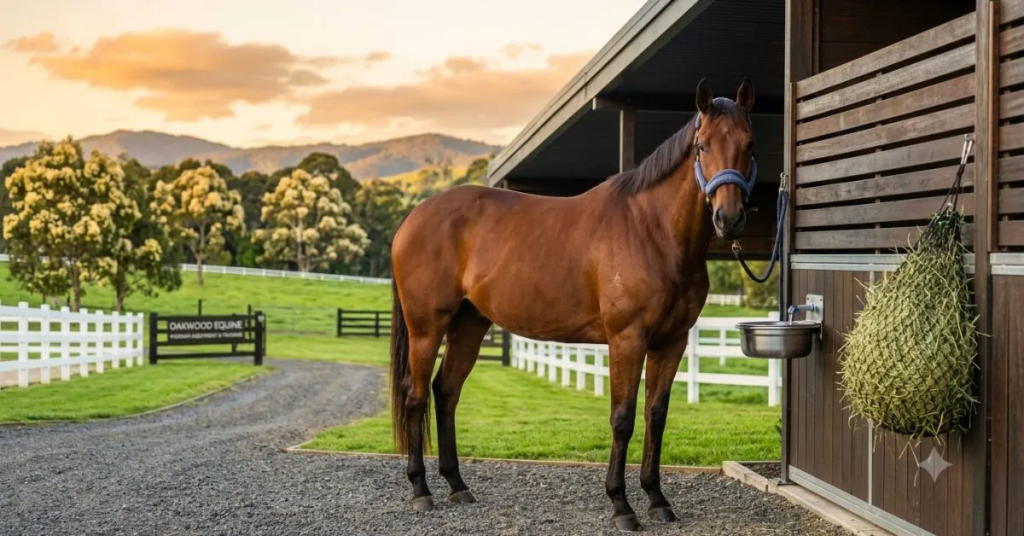
Shire Horse vs. Average Riding Horse
| Trait | Shire Horse | Average Riding Horse |
| Average height | 17-19 hands | 14–15.2 hands |
| Average weight | 800-1,100 kg | 400–600 kg |
| Primary use | Draft, farm work | Riding, sport |
| Temperament | Calm, steady | Varies by breed |
Sampson vs. Other Giant Horses
While Sampson remains the record holder, several other horses have come close over the years, each representing a different era and breed of giant horse.
| Horse | Breed | Height | Notes |
| Sampson (Mammoth) | Shire | 21.25 hands (219.7 cm) | Tallest and heaviest horse ever recorded (1850) |
| Big Jake | Belgian | 20.3 hands (210.19 cm) | Held the “tallest living horse” title until his death in 2021 |
| Dr. Le Gear’s Percheron | Percheron | 21 hands | Advertised as the “largest horse in the world” in a 1915 periodical |
| Brooklyn Supreme | Belgian | 19.2 hands | Weighed around 3,200 lb, a well-known contender in the early 1900s |
| Big John | Belgian/draft cross | ~20.3 hands (6 ft 8 in at hip) | Popular unofficial “largest living horse” title in recent years |
No horse since Sampson has matched both his height and his weight simultaneously, which is the key reason his combined record has remained unbroken for well over a century and a half. Individual horses have occasionally approached his height, and others have approached his weight, but no single animal has combined both figures the way Sampson did.
Why Modern Horses Haven’t Broken the Record
A few factors help explain why Sampson’s record has proven so durable:
- Breeding priorities have shifted. Modern draft horse breeding often favours manageable size, soundness, and temperament over maximum size, since heavy machinery has replaced draft horses for most farm work.
- Health risks increase with extreme size. Very large horses face greater strain on joints, hooves, and the cardiovascular system, so breeders and owners today are less inclined to push for extreme height and weight.
- Fewer horses are measured for records. Record attempts require formal verification, and far fewer draft horses are bred and tracked at the scale they once were during the height of the working-horse era.
Is the Photo of Sampson Real?
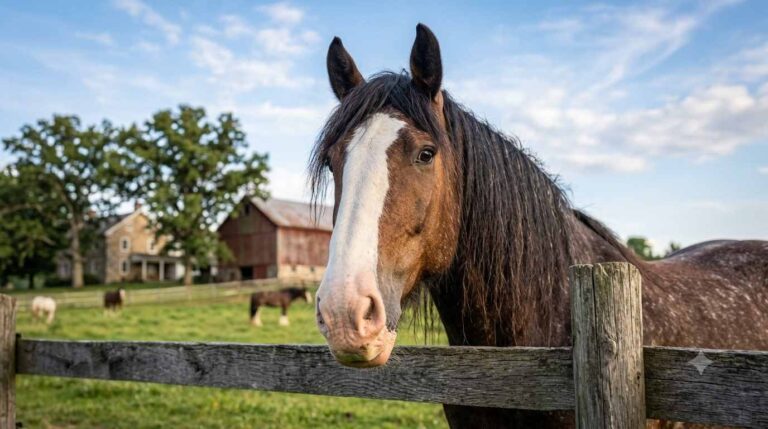
Because Sampson lived and died decades before modern photography was common, no verified photograph of him exists. Images circulating online claiming to show “the biggest horse in the world” are often either unrelated photos of other large draft horses or, more recently, AI-generated images designed to look convincing.
Fact-checking organisations have specifically investigated viral images claiming to depict Sampson and found no evidence connecting them to the actual horse. Guinness World Records’ entry on Sampson is based entirely on written historical measurements taken in 1850, not on photographic evidence, since practical horse photography of this kind was not yet widespread in rural England at the time.
This is a useful detail to keep in mind: any image online claiming to be “the real photo of Sampson” should be treated with skepticism, since no such verified image is known to exist in any historical archive or record.
Key Takeaways
- Sampson, later renamed Mammoth, is the tallest and heaviest horse ever officially recorded, according to Guinness World Records.
- He measured 21.25 hands (219.7 cm) tall and weighed around 1,524 kg (3,360 lb).
- He was a Shire horse bred by Thomas Cleaver in Bedfordshire, England, foaled in 1846 and measured in 1850.
- No verified photograph of Sampson exists, despite images circulating online claiming otherwise.
- His combined height-and-weight record has stood unbroken since 1850, making him the definitive answer to “the biggest horse in the world.”
Sampson’s story endures not because of dramatic tales or surviving photographs, but because of one simple, well-documented fact: no horse before or since has ever matched his sheer scale. For horse enthusiasts, explore our horse names, black horse names, and racehorse names.
Other Famous Giant Horses
Sampson’s record still stands, but a few other giants have come remarkably close over the years, each with their own story.
Goliath
Goliath was a Percheron gelding who held the tallest-living-horse title before Big Jake, standing around 19.1 hands tall. He lived in Illinois in the United States and was a gentle ambassador for draft breeds, appearing at fairs and charity events until his death in 2001.
Cracker
Cracker was a Shire gelding from Lincolnshire, England, who was once tipped as a future world record holder. He reached roughly 19.2 hands and weighed close to 2,600 lb. His friendly temperament made him a favourite at county shows across the UK.
Giant Horse Breeds
Nearly every giant horse on record comes from a small handful of heavy draft breeds. Here are the breeds behind the world’s biggest horses, beyond the Shire:
- Belgian Draft — muscular and compact, the Belgian is the breed of Big Jake and Brooklyn Supreme. Belgians typically stand 16.2–17 hands and are known for their exceptional pulling power and calm nature.
- Clydesdale — the elegant Scottish breed with feathered legs, usually 16–18 hands. Clydesdales are lighter than Shires but can still reach enormous sizes; they are famous as the breed behind the Budweiser hitch teams.
- Percheron — the French draft breed behind Goliath and Dr. Le Gear’s record-setting Percheron. Percherons average 15–19 hands and are prized for their intelligence, stamina, and slightly more refined build than Shires.
Caring for a Giant Horse
Feeding and housing a horse the size of Sampson is a serious undertaking. These gentle giants come with outsize appetites and outsize costs.
What Do Giant Horses Eat?
A giant horse can eat 25–35 lb of hay per day — roughly double what an average riding horse needs — plus several pounds of grain or concentrate to maintain condition. They can drink 20 or more gallons of water daily, especially in warm weather. Big Jake reportedly ate a full bale of hay and around 40 quarts of oats every single day.
Equipment and Costs
Standard tack and stables simply do not fit. Giant horses need custom-made saddles, extra-large halters and blankets, reinforced fencing, and oversized trailers. Farrier work costs more too — draft horses wear special shoes and some need a second farrier to hold each massive hoof. Owners should budget at least two to three times the annual upkeep of an average horse.
Are Bigger Horses Stronger?
Generally yes — pulling power scales with body mass, which is why draft breeds were developed for farm and freight work. But extreme height does not always mean extreme strength; a stocky Belgian can out-pull a taller, lankier horse. Sampson combined both traits, which is exactly what made him exceptional.
Are Tall Horses Good for Riding?
They can be, but they are not for everyone. Climbing aboard a horse over 19 hands requires a mounting block or a leg-up, and the ride feels very different from a standard horse. Their gaits are smooth but their sheer size makes them slower to turn and stop. Most giant horses today are kept for showing, driving, and breeding rather than everyday riding.
Where to See Giant Horses Today
You can still see descendants of these gentle giants in person. Many agricultural fairs and draft horse shows in the United States and the United Kingdom feature Shires, Belgians, Clydesdales, and Percherons. The Budweiser Clydesdales tour regularly across the US, and breed society shows in England often showcase some of the tallest living Shires.
Is Big Jake still alive?
No. Big Jake, the Belgian who held the tallest-living-horse title at 20.3 hands, died in 2021 at the age of 20. He lived on a farm in Wisconsin and was known for his remarkably gentle nature.
What is the biggest horse alive today?
Since Big Jake’s death in 2021, the tallest-living-horse title has been informal. Big John, a Belgian/draft cross measuring around 20.3 hands at the hip, has been a popular unofficial holder of the title in recent years.
What are the top 5 biggest horses ever recorded?
The most commonly cited list is: 1) Sampson (Mammoth) the Shire at 21.25 hands, 2) Dr. Le Gear’s Percheron at 21 hands, 3) Big Jake the Belgian at 20.3 hands, 4) Big John the Belgian cross at around 20.3 hands, and 5) Brooklyn Supreme the Belgian at 19.2 hands and roughly 3,200 lb.
FAQs
Who is the biggest horse in the world?
Sampson, a Shire gelding later renamed Mammoth, is recognised by Guinness World Records as the tallest and heaviest horse ever documented, with a record that has stood since 1850.
How tall was Sampson the horse?
Sampson measured 21.25 hands, or 219.7 cm (7 ft 2.5 in), at the withers when he was measured in 1850 at four years old.
How much did Sampson weigh?
Sampson weighed approximately 1,524 kg (3,360 lb), making him the heaviest horse ever recorded alongside his height record.
What breed was Sampson?
Sampson was a Shire horse, a British draft breed known for its height, strength, dense bone structure, and calm temperament.
Who bred Sampson?
Sampson was bred by Thomas Cleaver at Toddington Mills in Bedfordshire, England, where he was foaled in 1846.
Why was Sampson renamed Mammoth?
Sampson was renamed Mammoth later in life because of his sheer size, a name considered more fitting for a horse of his extraordinary height and weight.
Is there a real photo of Sampson?
No verified photograph of Sampson exists, since he lived before photography of horses was common; most images claiming to show him online are unrelated or fabricated.
Has any horse ever beaten Sampson’s record?
No horse has matched Sampson’s combined height and weight record since it was set in 1850, though horses like Big Jake and Big John have come close in height alone.
What is the difference between the tallest horse ever and the tallest living horse?
“Tallest horse ever” refers to Sampson’s all-time historical record, while “tallest living horse” is a separate, currently-updated title held by horses alive today, such as Big Jake before his death in 2021.
Morgan is a horse naming enthusiast and equestrian content writer with a passion for helping horse owners find the perfect names for their equine companions. From classic and elegant names to unique, Western, funny, and breed-specific ideas, Morgan creates well-researched, easy-to-browse name collections designed to inspire every horse lover. The goal is to make choosing the right horse name simple, enjoyable, and memorable.